Customer Research
How Can AI Turn Customer Interviews Into Messaging Without Losing the Evidence?
What happens when one customer’s memorable phrase becomes your next campaign headline? It may reflect a real need—or stand out because it is vivid. An AI-assisted theme-sorting workflow is worth testing, but its output is not proof that a pattern exists: a polished summary can make sparse evidence seem decisive. For a small marketing team, this distinction can shape a landing page, ad, or sales pitch. Keep proposed messages traceable to interview notes, separate repeated comments from single observations, and mark what three interviews cannot establish before changing a campaign.
Facts and examples
Build the prompt around the evidence
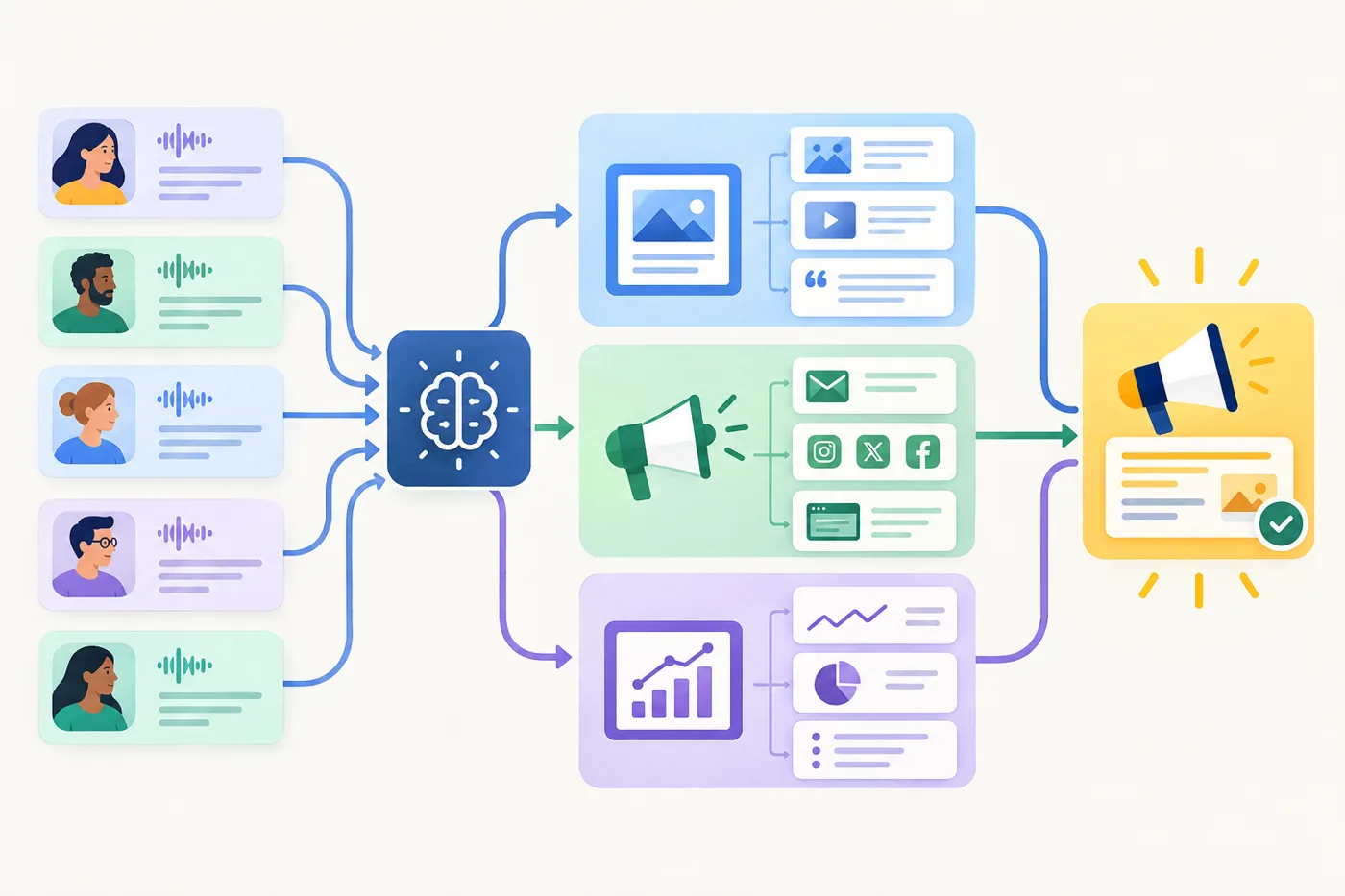
Treat the prompt as a set of checks, not a request for a verdict. First, state the decision and define a recurring theme; ask the model to distinguish repeated comments from a single observation. Second, provide labeled notes and require each theme to include exact supporting wording and an interview identifier. Label direct quotations separately from paraphrases so the table does not blur customer words with your interpretation. Tell the model to mark missing details “not found” rather than infer context. Third, ask for candidate themes and evidence before requesting message drafts. Include conflicting comments and ask the model to show them rather than smooth them into agreement. Treat these as safeguards to test, not guarantees of accurate analysis. Verify cited passages against the originals before using suggested copy.
In practice
Start with a question, not a conclusion
Choose one messaging decision, such as what problem to lead with on a service page. Write it down before analyzing notes. “What makes customers delay choosing a provider?” is more useful than “What do customers think of us?” because it gives you a specific lens for judging whether a theme matters to the decision.
For a first pass, select three interview notes and remove names or unnecessary personal details. Keep customer wording intact, and label interviewer observations and paraphrases separately. That way, when you review a proposed theme, you can tell whether its support comes from a direct statement or someone’s interpretation.
Build an evidence table before drafting copy
Ask AI for candidate themes, not a verdict about what your audience cares about. Request a table with a theme, supporting text, interview identifier, quote-or-paraphrase label, and any conflicting or missing evidence. Tell it to write “not found” rather than fill gaps with plausible context.
For example: “Use only the notes below. Group similar statements, but do not call a single comment a recurring pattern. For each theme, show the exact supporting text and interview identifier. Separate direct quotes from paraphrases. Include evidence that complicates the theme. Label unsupported findings.” Paste notes with consistent labels, such as Interview A, B, and C.
Check each cited passage against the original notes. Confirm the wording and identifier, and make sure shortening a quote has not changed its meaning. Correct the table before using it to draft messages. Treat this checking step as essential: a well-organized table is still an interpretation of the source material.
Separate recurrence from importance
Keep two questions distinct: what appeared more than once, and what seems consequential? Repetition can make a theme worth exploring, but does not by itself show that it is a purchase priority. A single detailed account can also suggest a possible obstacle worth asking about, without showing how common it is. Record the basis for each judgment rather than combining them into one confidence label.
Consider this fictional example: two interviewees say they are unsure what happens after requesting a consultation; a third describes a costly delay linked to unclear next steps. The uncertainty recurs in this small set. The costly delay is a single, potentially important account, not evidence that customers generally lose money. A cautious message might explain what happens after a request, without making a broad claim about financial harm.
Draft messages with a traceable chain
After checking the table, ask for a few message options tied to a selected theme. For each, require the proposed wording, its supporting text and interview identifiers, and a note about what the notes do not establish. Set aside copy that cannot be traced to source material, however persuasive it sounds. Compare each draft with the original statements: does it preserve their meaning, or turn one situation into a universal promise? Keep conflicting comments visible rather than rewriting them as consensus.
Make a reversible campaign decision
Use a supported message as a limited test, not a permanent positioning truth. Try it in one draft page or campaign variation while keeping the existing version available for comparison. Decide in advance what you will inspect, such as whether the variation prompts more relevant inquiries. If other campaign elements change too, do not assume the wording alone caused any difference.
Three interviews may produce a better question for the next conversation rather than headline copy. Before updating a campaign, try the workflow on three notes: check the cited wording, distinguish recurring themes from single observations, and draft only messages you can trace to the evidence.
Recap and next step
Keep the message tied to evidence
Treat AI as an organizer to test, not an authority on customer priorities. Ask it to list each theme with exact source wording and interview IDs; check references against notes. Repetition can merit investigation but does not establish purchase priority; one vivid account may prompt a follow-up, not a broad claim. Today, try the workflow on three interviews: build the evidence table, verify quotes, and draft only wording traceable to the source. Use the result to guide a next question, not declare a market truth.